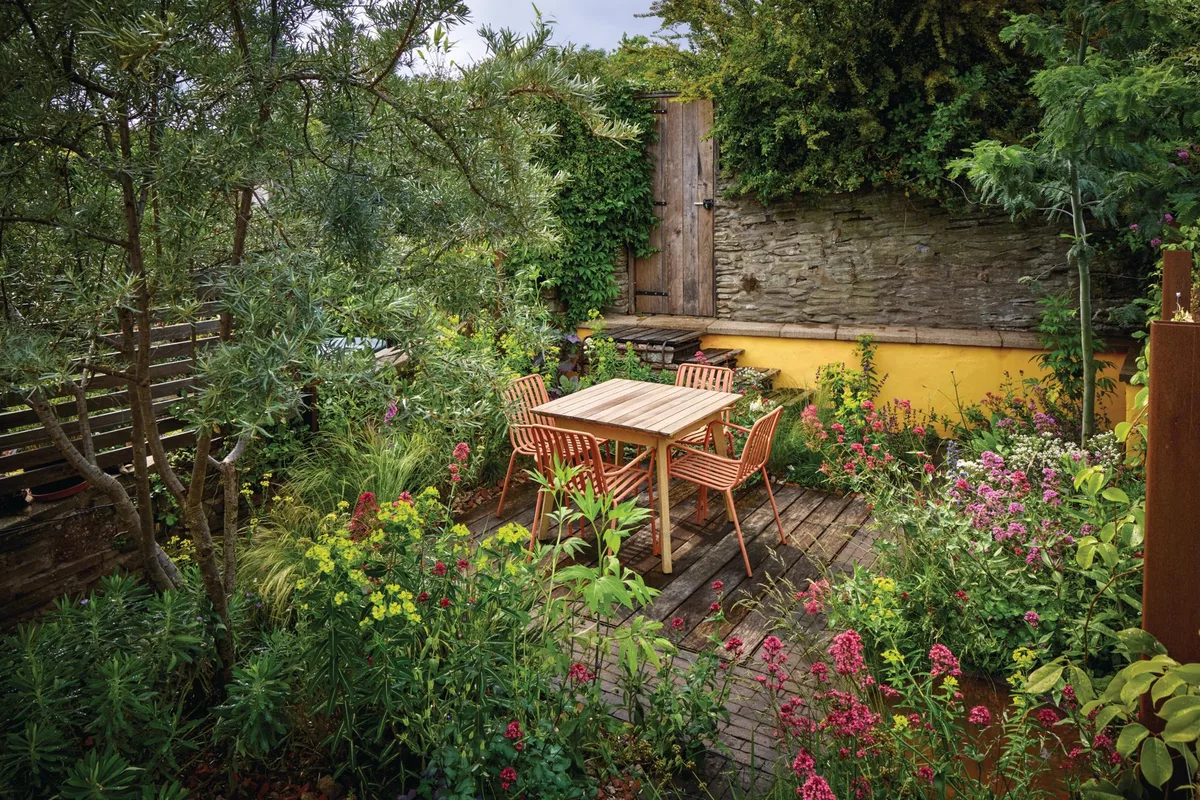
Harry Holding is an award-winning designer with three Chelsea show gardens under his belt, including this year’s Eden Project: Bring Me Sunshine garden. But in his own small garden in the east Bristol suburb of St Werburghs, which measures a mere seven metres by four metres, he was his own client. “The idea was to be experimental, to push the boundaries, and learn,” he explains. “There are ideas in this design I wouldn’t try in a client’s garden without having experimented with them in my own home plot first.”
Harry was keen to take a minimal-waste approach, from which everything else would flow. The garden backs onto a nature reserve, and “ultimately we were trying to connect to the landscape beyond, but in a light touch way. I wanted to import as little as possible, maximise the amount of planting and bring in biodiversity”.
First, Harry needed to create a useable space: the house is set into a steep hill, and the main garden is actually at first-floor level. He lowered the retaining wall behind the house by one metre, adding a balustrade and squeezing in a shed in the dead space between the wall and the house. There is now a shady terrace outside the kitchen’s bifold doors, with steps up to the main garden, which despite being north facing, is a suntrap almost all year round.
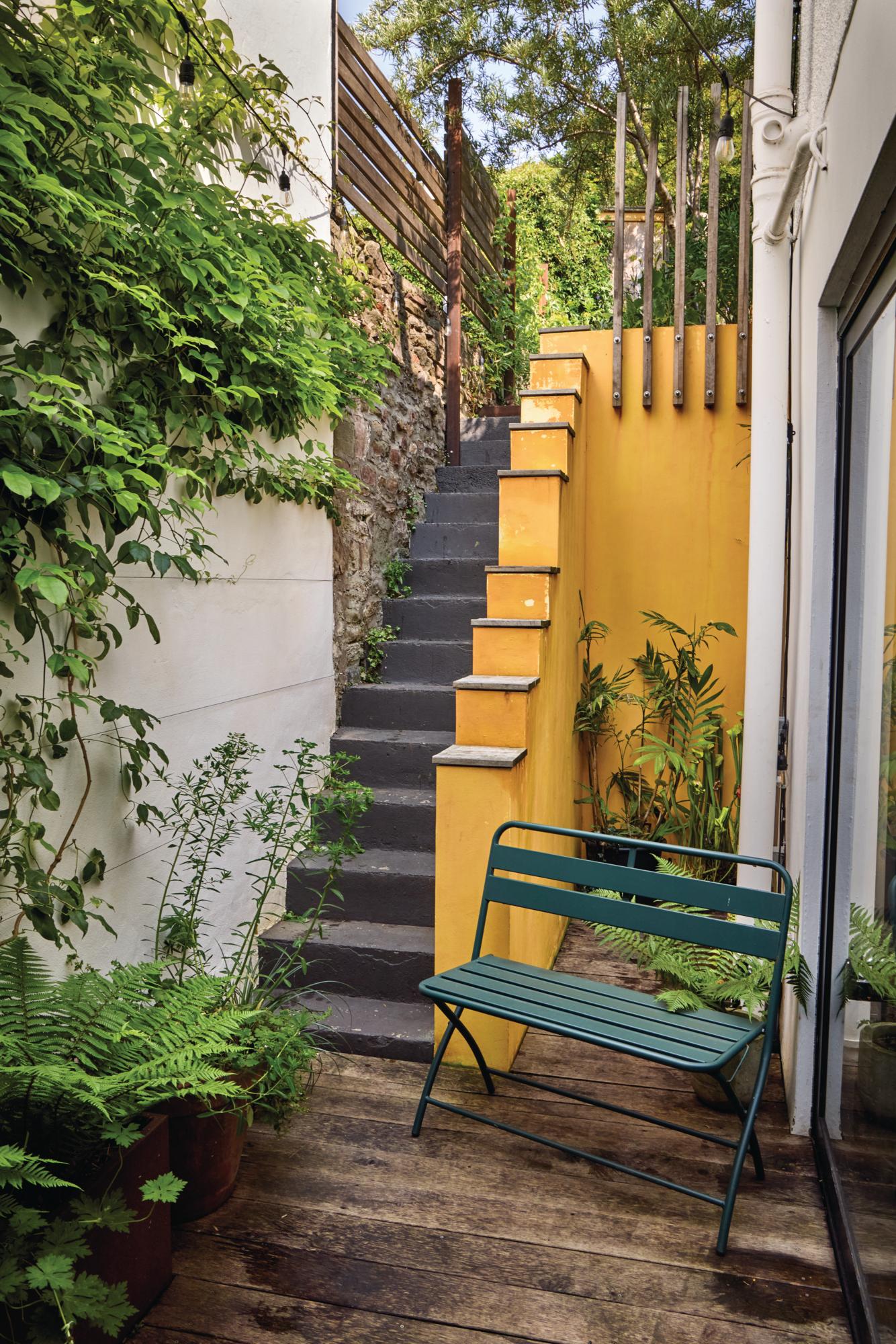
Here, Harry created a floating deck against the house and over the shed below, which he says unlocked the flow of the space. “It’s lovely sitting on the deck in the shade during the day, or in the sun in the evening with friends, or eating lunch at the table.”
You may also like
Harry painted some of the walls with a warm orange-yellow lime paint. “It was too expensive to remove the pebbledash on the house, so I tried to lose the sense of it,” he explains. “There was also the idea of bringing in warmer tones year-round to a north-facing courtyard.”
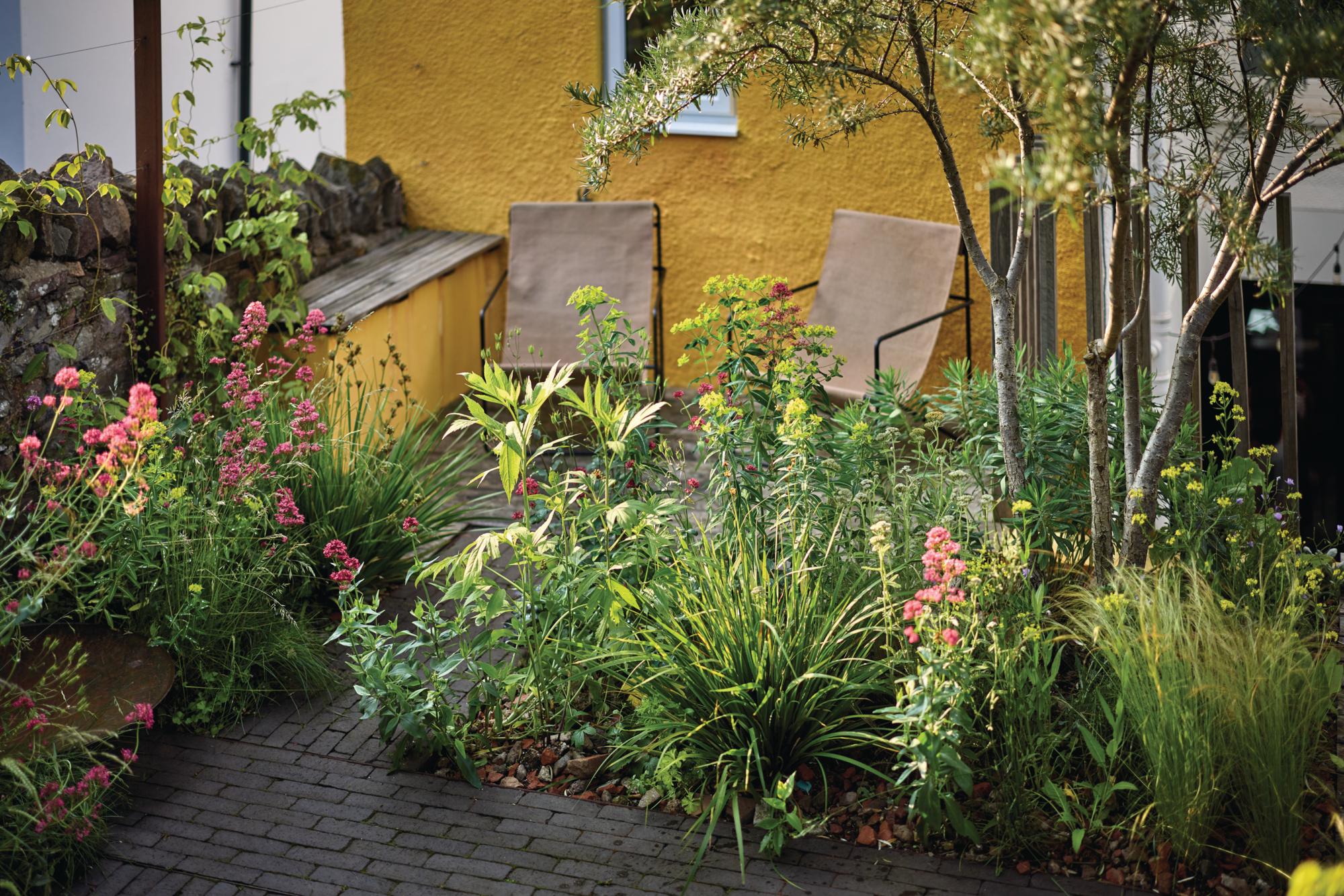
Almost every element in the garden was reused. The garden’s old concrete slabs and bricks and rubble from the house works were crushed using a hired crusher, and reused as sub-bases for the decked areas, pathways and the gabion steps. They were custom-made by a local metalworker using rebar – Harry’s take on a dry-stone wall.
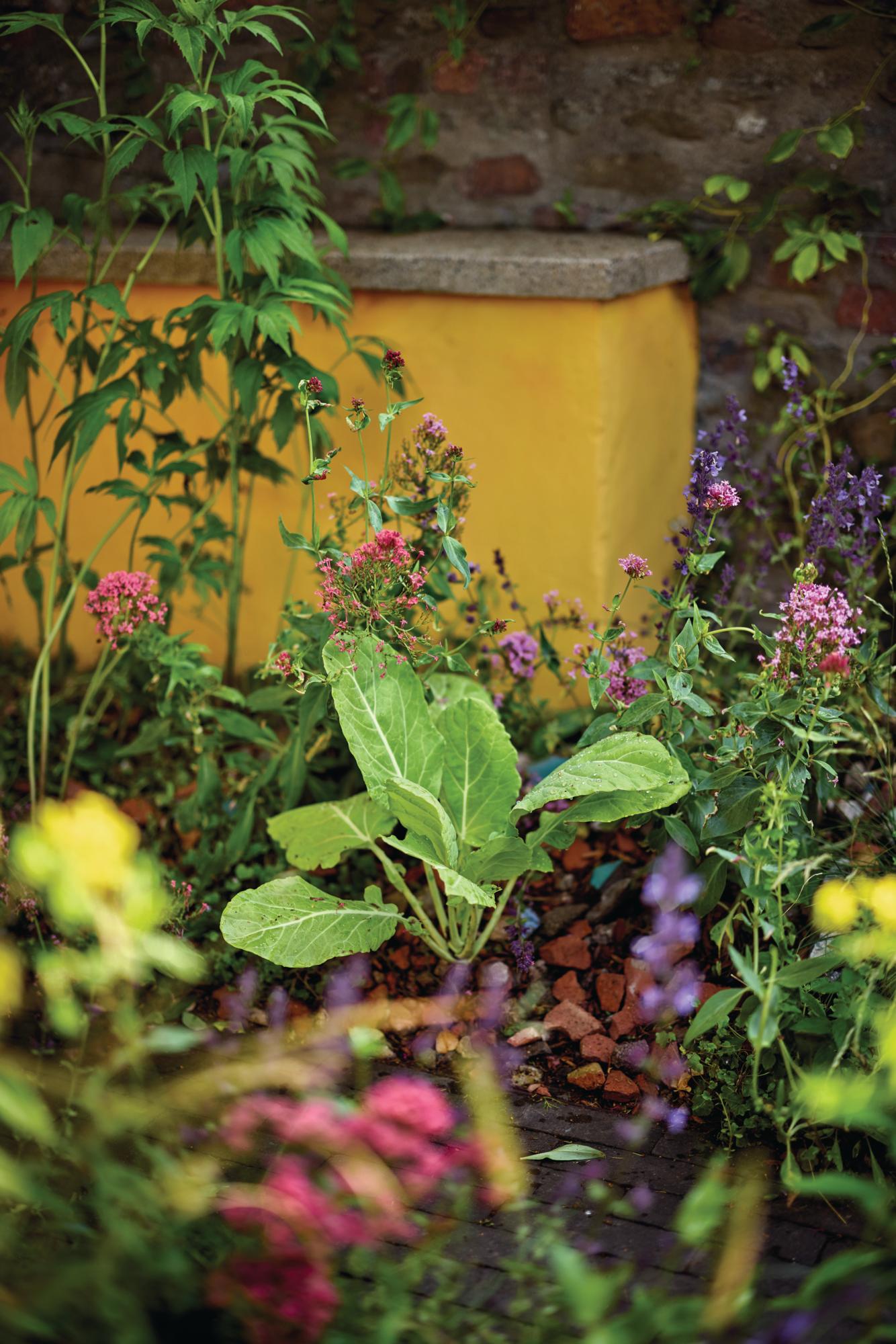
Harry also used the waste materials to create a range of different planting substrates. Some areas are dense rubble, while others are a finer crush; their depths vary from 200-500mm. Harry added trees that could cope with the hot, free-draining conditions, including a multi-stem sea buckthorn, Hippophae rhamnoides, which in late summer offers plenty of berries packed with vitamin C, and a mimosa, Acacia dealbata. Structural plants include Euphorbia characias ‘Humpty Dumpty’, left over from his Chelsea 2024 garden and Libertia grandiflora. The rest was seeded with a grasses mix from Emorsgate seeds and a mix of seeds that Harry put together.
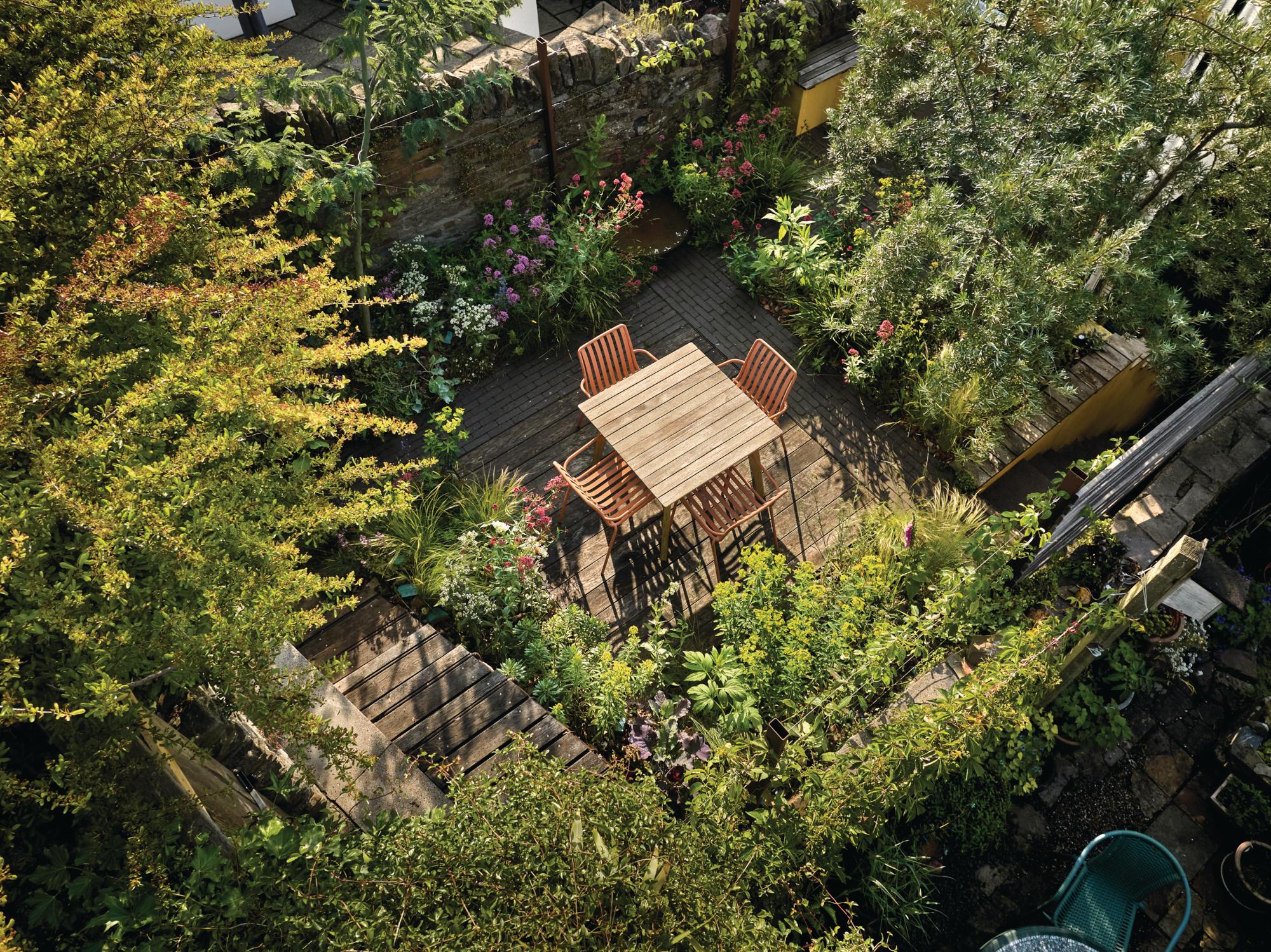
He was also keen to bring in edimentals. “It wasn’t about being fully self-sufficient, but bringing in things we love, such as Turkish rocket, garlic cress and Sedum sarmentosum (stringy stonecrop), great in the Greek dish horta.” Achillea millefolium is good for teas, Rudbeckia laciniata has edible foliage and brings late-season height and colour, and young Centranthus ruber leaves are great in a salad. Harry added kales and collards in planting pockets filled with topsoil, as they need a bit more moisture.
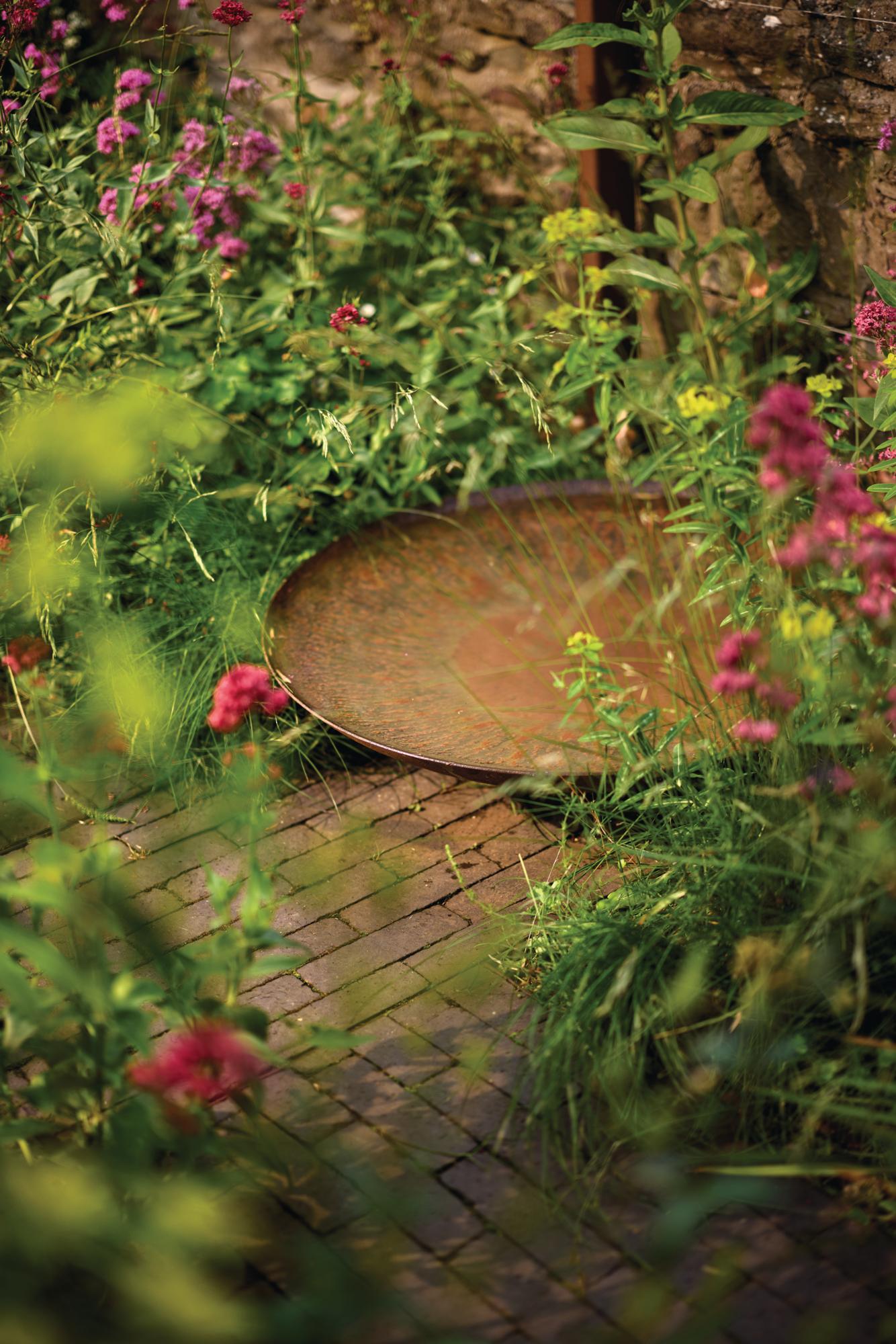
“It was an experiment to see what the results would be in such a diverse array of conditions in a small space,” says Harry. “Most things established well, but some areas were more successful than others – the areas of larger-sized rubble didn’t have enough fines [smaller particles of rubble or sand]. I learned that red valerian will grow anywhere – but we all knew that anyway.”
You may also like
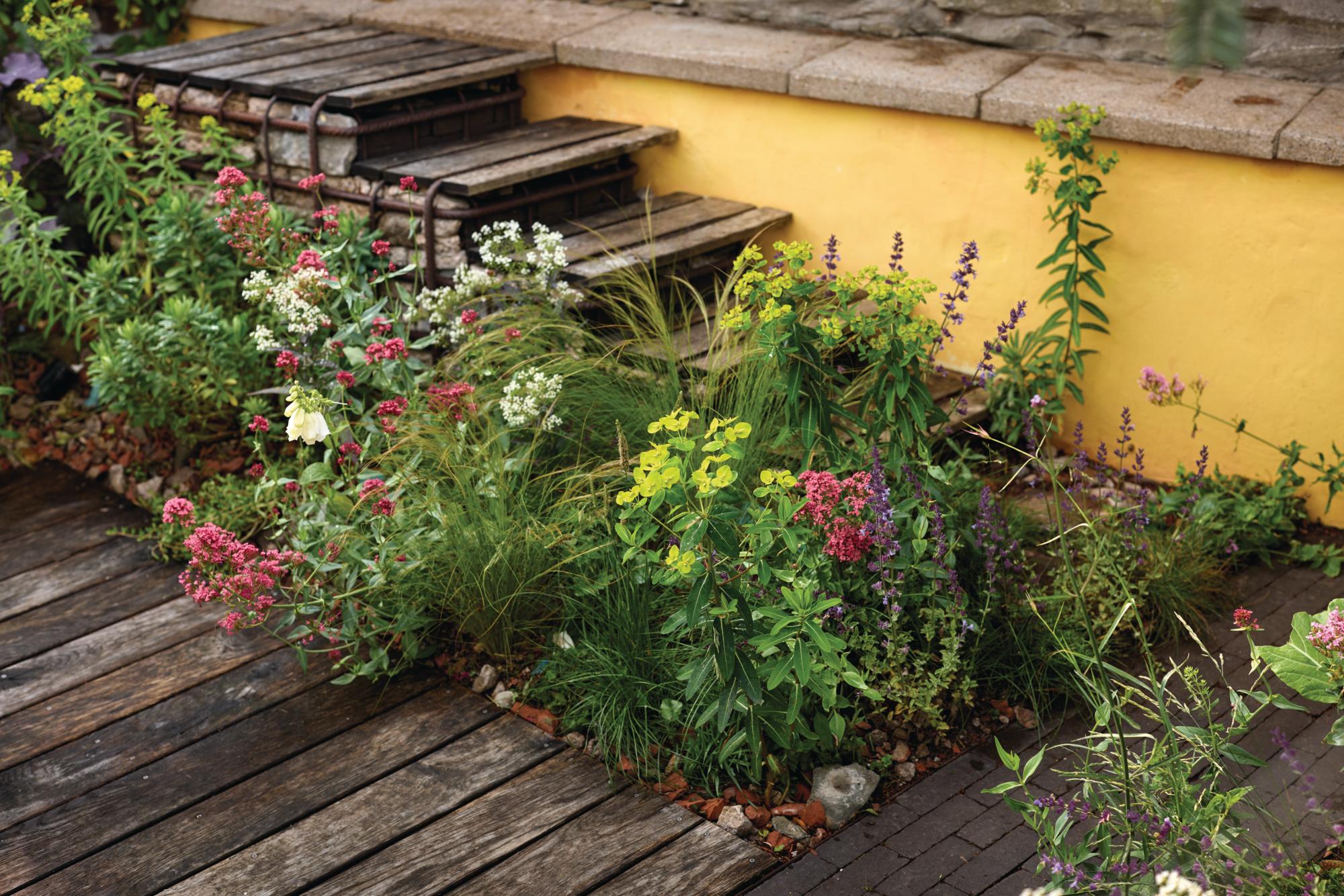
Many plants, such as Erigeron, California poppy and aquilegias, have blown in from the nearby nature reserve. “I manage and encourage,” says Harry. “I weed out woody things such as buddleja and allow a lot of perennials, like Verbena bonariensis. That’s the thing about being in a city – you get ornamental plants seeding in.”
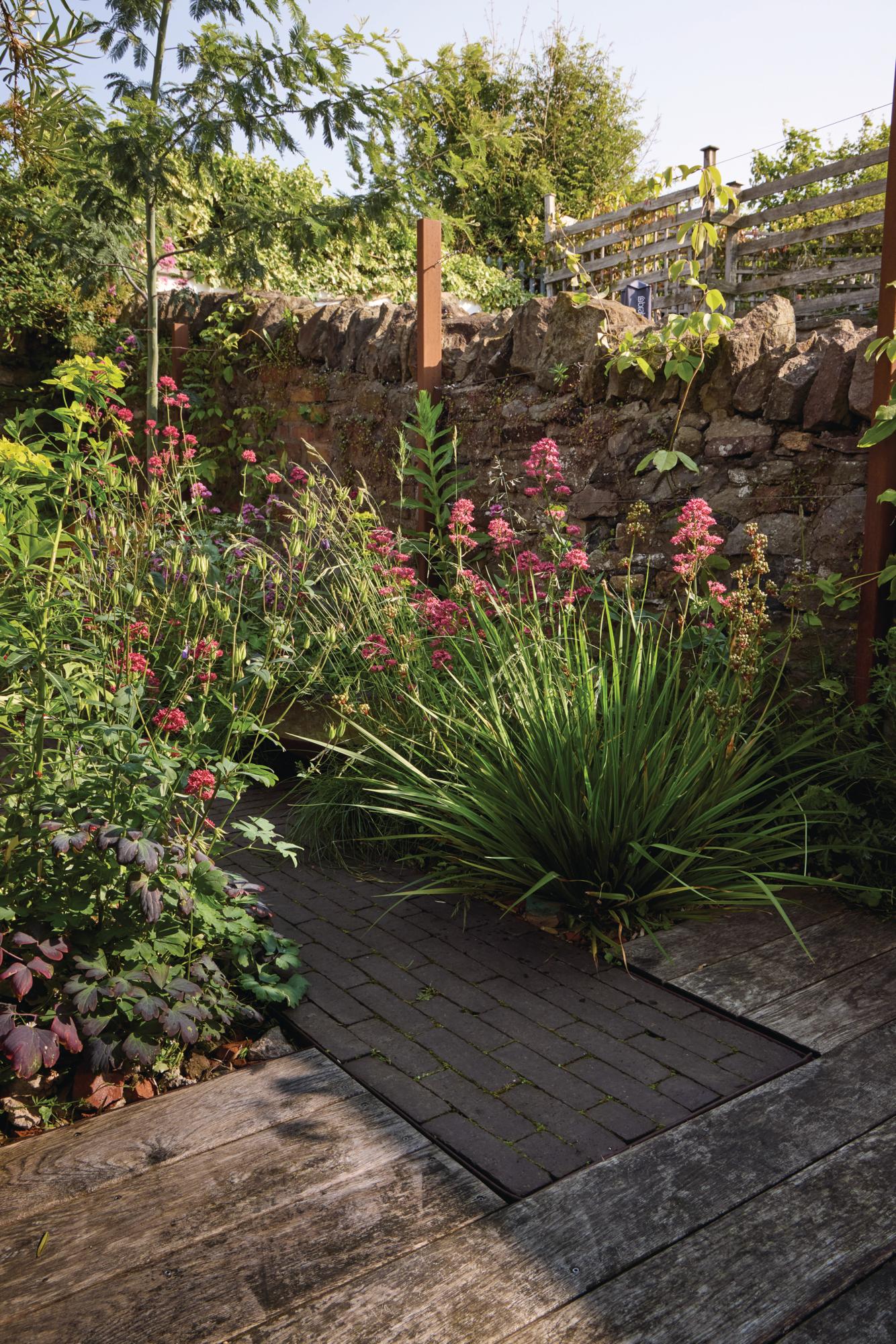
Campanulas from the wall at the front of the house now grow out of the walls and the steps at the back, and the euphorbias have seeded around, too. “I’ve become more of an ‘ecosystem engineer’, creating disturbance, selectively cutting back, thinning out, and throwing more seed in,” says Harry. “Wolfgang the dog does his bit as well – he went through a phase of digging holes in the rubble. The amount of invertebrates is vast – in summer, it’s humming everywhere you look.”
Although Harry has loved living here, he admits it’s time to move on, to a bigger, experimental plot in the Welsh borders, and is selling up. “I’ll miss this garden – it’s been such a joy to live with and to really garden every square inch. I’ve particularly loved the opportunity to experiment. I thrive with new challenges and feel lucky to have the space to continue that lifelong journey of learning that we gardeners sign up for.”